


Saints of the Exiled and the Reclaiming of Rebel Queens
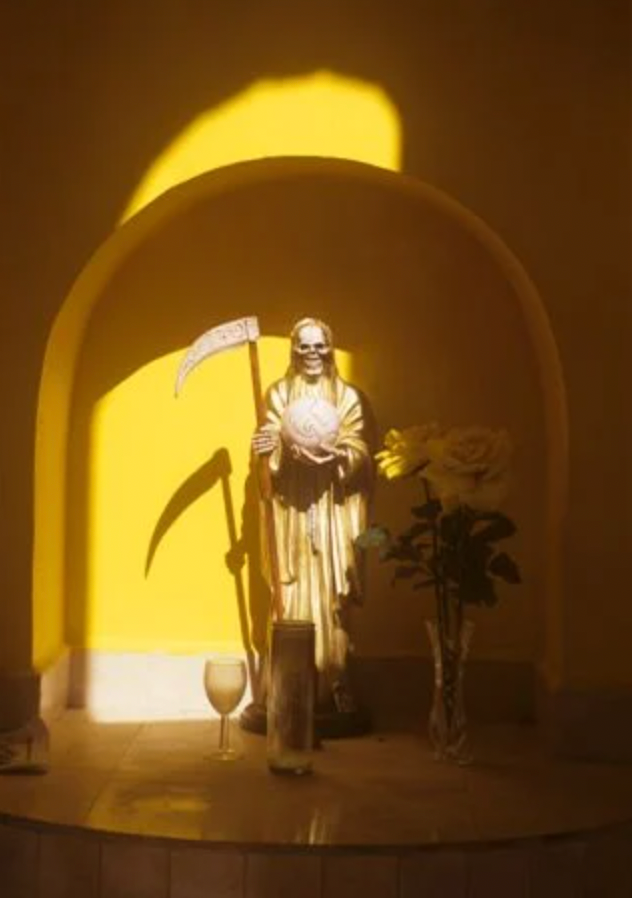
I was in Chiapas, Mexico in 2014 when a merchant introduced me to Santa Muerte, a personification of death who offers love and protection to those living closest to it. I was purchasing a candle at a spiritual store in San Cristobal de las Casas, it was early 2014, and I picked up a Santa Muerte charm.
The shopkeeper came over and looked me in the eyes, “La Santa Muerte,” he said. “¿Y es buena?” I asked, holding an object with her image for the first time. “Es buenísima,” he replied.
I carried that charm with me through my first four months in Mexico, not knowing, of course, the full extent of the cult of Santa Muerte (it’s deep and very complex, of course), but the shopkeeper thought I should have it, and he wasn’t desperate for a dollar.
I had a few guardians on that voyage, my second solo backpacking trip, but my longest at 4 months. Vultures, Scarlet Macaws, kind strangers. I was blessed even in moments where it didn’t feel like it. I’ll never know if Santa Muerte had a part in making any bad luck save me from even worse luck (nod to Cormac McCarthy), but I like to feel that I had a companion of sorts.
I was raised in a spiritually open, but not religious, household. I have only been to church a few times in my life, but I generally visit churches when I travel. I do not have religious trauma, and I am sorry for those who do.
But, something is enlivening to me about these folk saints; they’re like rebels given rise and power by the people. Not the institution.
Folk saints are spirits/energies revered in popular culture, but not officially recognized by the Catholic church. In the case of Santa Muerte, Gauchito Gil, and Santa Sara Kali, as well as many other folk saints, they are often associated with a society’s most marginalized people. Many represent an image of outlaw or feminine energy that wasn't welcomed by the rigid structure of the Catholic church.
It was along the lonesome highways of Argentina that I’ve met Gauchito Gil, a renegade saint with a vengeance story. And in a favela in Rio de Janeiro, when I met Santa Sara Kali, a wandering spirit protecting those who live on the road.

There are haves and have-nots in all cities, all places across the globe. Some more than others. But in Rio de Janeiro, this is marked by 600 favelas, many of which sit just behind apartments worth more money than the people in the favela will have across their entire lives. Eating at restaurants that serve a meal which costs more than a day’s labor. The communities are excluded and designed to house the marginalized of society, who are forced to source money from the non-marginalized.
I was introduced to Santa Sara Kali by Angelica de Paula, an incredible samba and jazz singer from Rio. She lives in communities. As the favelas are called. The city is the cidade. The favela is the comunidade. Angelica sings, cooks, leads, and she even painted my nails one night. A classic Gemini. Jane of all trades. Her birthday falls on Sara Kali’s saint day, and so when she celebrates her solar return, she honors Sara Kali in song and beauty.
Sara Kali is a fascinating character, as all folk saints tend to be. Representative for the people. Of the places where they are venerated.
Sara Kali is quite popular in Brazil, but it wasn’t until my 5th visit to the country that I met her. I had been mostly enchanted by Nossa Senhora da Aparecida, the patron saint of Brazil, who has been syncretized with Yemanjá of Yoruban African traditions. Whether the same goddess, or two separate representations of the goddess, Aparecida and Yemanjá are both very present in Brazil. Like two loving mothers overseeing each other's vast lineage of beautiful children.
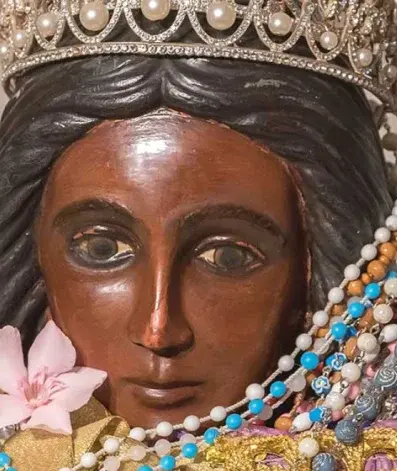
Sara Kali is associated with protecting travelers, marginalized people, and displaced people. She’s a saint of the exiled. Kali means the black one, in Hindi, given the famous deity of destruction and creation, Kali herself. Sara Kali is deeply mysterious, like the great Kali of India. And that her primary spaces of worship are in Southern France and the rainforest of Brazil, she’s certainly an energy that's on the move.I hadn’t expected to meet Sara Kali, and that’s why the connection has felt so special. She’s called the Mother of the Gypsies, referring to the Romani people, who originated in India and wandered the lands to Europe and beyond. Playing music, living freely until constricted by society into living the existence of survival, in whatever way was available to them. They’ve been persecuted for centuries and many were murdered in the Holocaust. A large community of Romani people moved to Brazil with the great immigration waves to the Americas during the European wars of the 20th century. Some were already in Brazil, having been deported by the Portuguese in the 16th century. They brought Sara Kali with them, and her image of resistance and resilience among oppressed people resonated especially with Umbanda, a Brazilian folk religion incorporating Catholicism and African traditions.
There are many fascinating stories of Sara Kali, including that she was part of the Indian community that was living in Egypt thousands of years ago, and that she accompanied Mary Magdalene, Salome and Lazarus as they escaped Egypt by boat, surviving a storm that blew them off course to the mountains of Southern France where most Magdalene lore stories are rooted.
Some believe she was Magdalene’s daughter, born in Egypt many years after Jesus' murder. There is also the belief that she was a Romani woman, standing on the shores of Southern France with a lantern, guiding the refugees to safety and preserving the Magdalene lineage.
I don’t know why she has appeared to me now, as in not before, and not later, but she is most welcome. And once the connection was made, I started to see reflections of her everywhere. My psyche has been tuned to her frequency, and I am grateful for it.
We are in times where we need all the goddess that we can get.


Comments